Symposium · Philosophy of Religion · Pl. 10William James · 1842–1910
Belief in an Unseen Order
Setting doctrine aside
James delivered his Gifford Lectures as a psychologist rather than a theologian, treating religious experience as raw data to be studied like any other feature of human life. Rather than adjudicate whose God or scripture is correct, he asks what mystics, converts, and ordinary believers across traditions actually report going through. The lectures were given at Edinburgh in 1901 and 1902 and published as The Varieties of Religious Experience. James was ill for much of the period, and the book he produced is still the most read introduction to its subject.
The world it came from
William James was fifty-nine when he gave the Gifford Lectures at Edinburgh in 1901 and 1902. He had written the Principles of Psychology in 1890, taught at Harvard for decades, and suffered, in his twenties, a breakdown that he later disguised as a French correspondent's case in the lectures themselves. He was not a churchgoer. He was, however, fascinated by mediums, conversions, and mystics, and had lost patience with two things: a theology that argued about God's attributes as if experience did not exist, and a medical materialism that dismissed every vision as indigestion. The lectures were his answer to both. Study the experience, he said, before you judge the doctrine.
The idea
The life of religion consists of the belief that there is an unseen order, and that our supreme good lies in harmoniously adjusting ourselves thereto. This definition, James argues, captures Christian saints, Buddhist mystics, and secular seekers alike, all convinced that some order beyond ordinary appearances exists, and that aligning themselves with it is the deepest good available to them. James is describing an attitude, not a creed. The unseen order can be a personal God, a Buddhist law, or a Stoic providence. What makes the attitude religious is the sense that the adjustment matters more than anything else.
How the reasoning runs
James proceeds by method rather than by proof. First, distinguish the question of origin from the question of value: where an experience came from, a nerve or a revelation, tells you nothing about what it is worth. Second, gather the cases, conversions, mystical states, saintliness, across traditions, and describe them before explaining them. Third, notice what the cases share: a sense of something wrong, a surrender, a new centre of energy, a conviction of contact with an unseen more. Fourth, judge the results by their fruits, the lives they produce, since that is how we judge anything else. Conclusion: the religious attitude is a natural human fact with real effects, and its truth-question remains open, to be settled, if at all, by what it does.
Seen in life
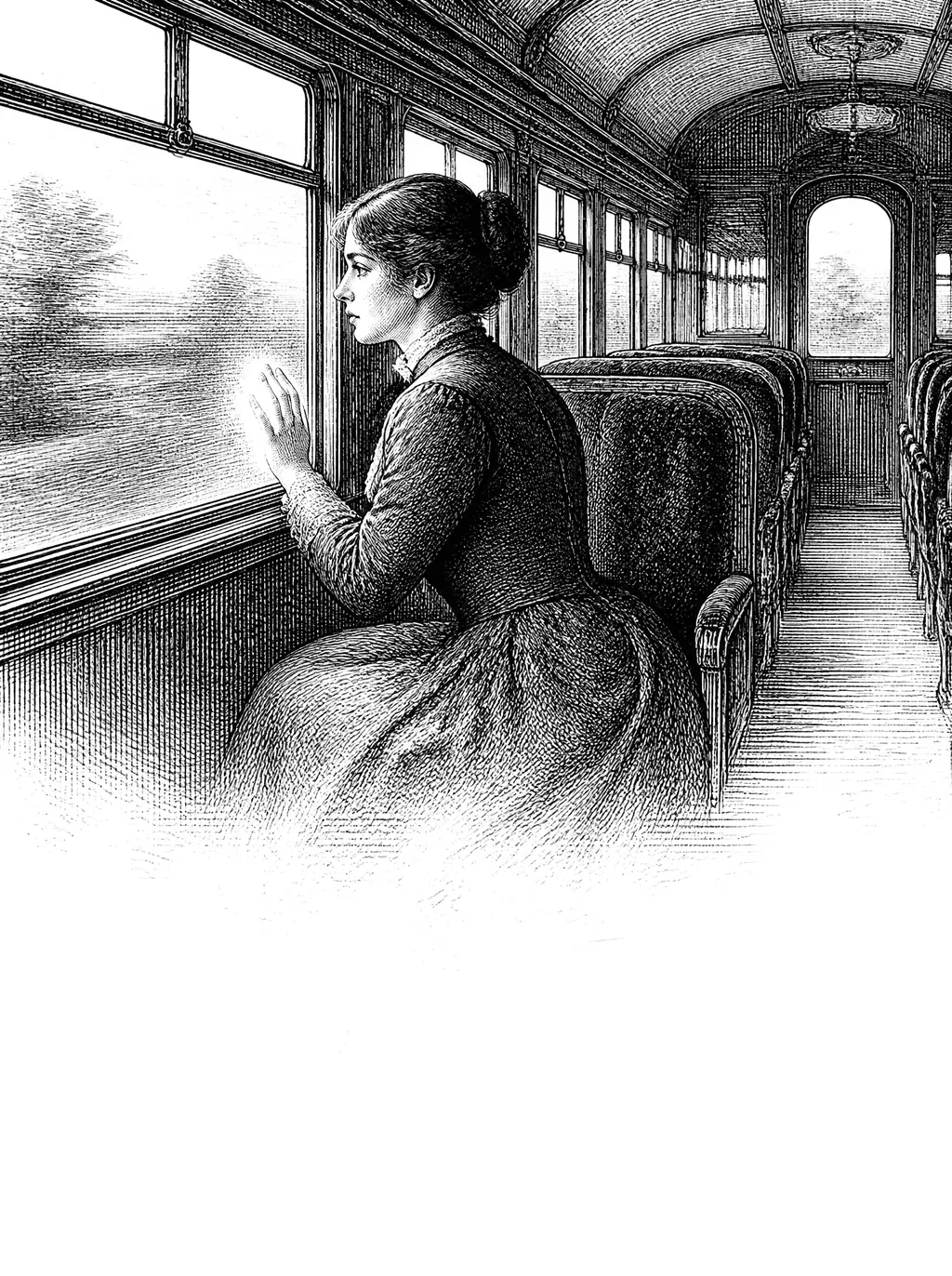
A colleague tells you that after her father died she felt, for a moment on a train, held by something she cannot name, and that she has organised her life around it since. You can ask where the feeling came from: grief and sleeplessness and a brain that wants comfort. James would say that is a fair question and the wrong one first. Ask instead what it did. She is steadier, kinder, and less afraid. That is data. It does not prove the unseen order exists; James never claims it does. It does mean that dismissing the experience explains nothing about her, and that a believer and a sceptic can both study it honestly if they look at the fruits before the roots.
Why it matters
This shifted the philosophical study of religion away from arguing over doctrinal truth and toward studying religious experience empirically, on its own psychological terms. It let James treat wildly different traditions as variations on one underlying human phenomenon, opening religion up to the same careful, descriptive study he brought to ordinary consciousness itself. The approach made religion a subject a scientist could work on without either converting or sneering. It is the origin of the psychology of religion as a discipline, and it gave believers a language for their experience that did not depend on any argument for God.
“The life of religion consists of the belief that there is an unseen order, and that our supreme good lies in harmoniously adjusting ourselves thereto.”
From the source
James offers his working definition directly: “The life of religion consists of the belief that there is an unseen order, and that our supreme good lies in harmoniously adjusting ourselves thereto. This belief and this adjustment are the religious attitude in the soul.” Everything else in his study elaborates this single core claim. He adds the caveats at once. Religion in this sense need not involve a personal God. The unseen may be an order, a law, an ideal. And the adjustment is what he elsewhere calls a person's total reaction upon life, a matter of feeling and conduct before it is a matter of belief. The later lectures fill the frame with cases.
The pushback
Doesn't defining religion so broadly risk draining away everything that makes any particular tradition distinctive, reducing rich, specific doctrines and rituals to one thin, generic formula about an unseen order? James would likely reply that this thinness is exactly the point, letting comparison across traditions proceed without smuggling in any single faith's own specific assumptions. A harder objection is that James studies only extreme cases: converts, saints, mystics. The ordinary believer who goes to services and prays without any experience to report is missing from the book, and the ordinary case may be what religion mostly is.
The reply
James answers the first objection directly: he is looking for the common root, and the root is thin by design. The branches, the creeds and rituals, are studied elsewhere, and he denies nothing about their richness. To the second he pleads guilty with an argument. Second-hand religion, taken from a church because it is there, tells you about institutions; first-hand religion, the experience that founded the institution, tells you about religion. He studies the founders' kind because it is the source. That is a partial answer at best. A tradition may be a living thing that ordinary practice sustains, and a book about its rare peaks may miss how it lives. James knew this and chose his subject anyway.
Where it went next
The Varieties founded the psychology of religion and remains its most read book. Wittgenstein read it repeatedly and wrote that it did him much good. It shaped Bill Wilson, whose Alcoholics Anonymous took the notion of surrender and the reliance on a higher power of one's own understanding from James's cases. Aldous Huxley's Perennial Philosophy, the study of mysticism from Underhill to Stace, and the modern research on psychedelics and religious experience all descend from it. Philosophers cite James's separation of origin from value against every attempt to explain religion away by its causes. Charles Taylor devoted a book, Varieties of Religion Today (2002), to what James saw and what he missed.
Where this leads
The right to believe shows James making a closely related argument in a separate, more purely epistemological essay, defending the rationality of religious commitment on evidence too thin to settle the question either way, a companion piece to this psychological study of what such commitment actually feels like from inside. Wager, then, without hesitation is the argument James was rescuing from Pascal's arithmetic. James thought a belief adopted for a payout would be dead on arrival; the right to believe is for the person whose experience already points somewhere and needs only permission.