Symposium · Political Philosophy · Pl. 4John Locke · 1632–1704
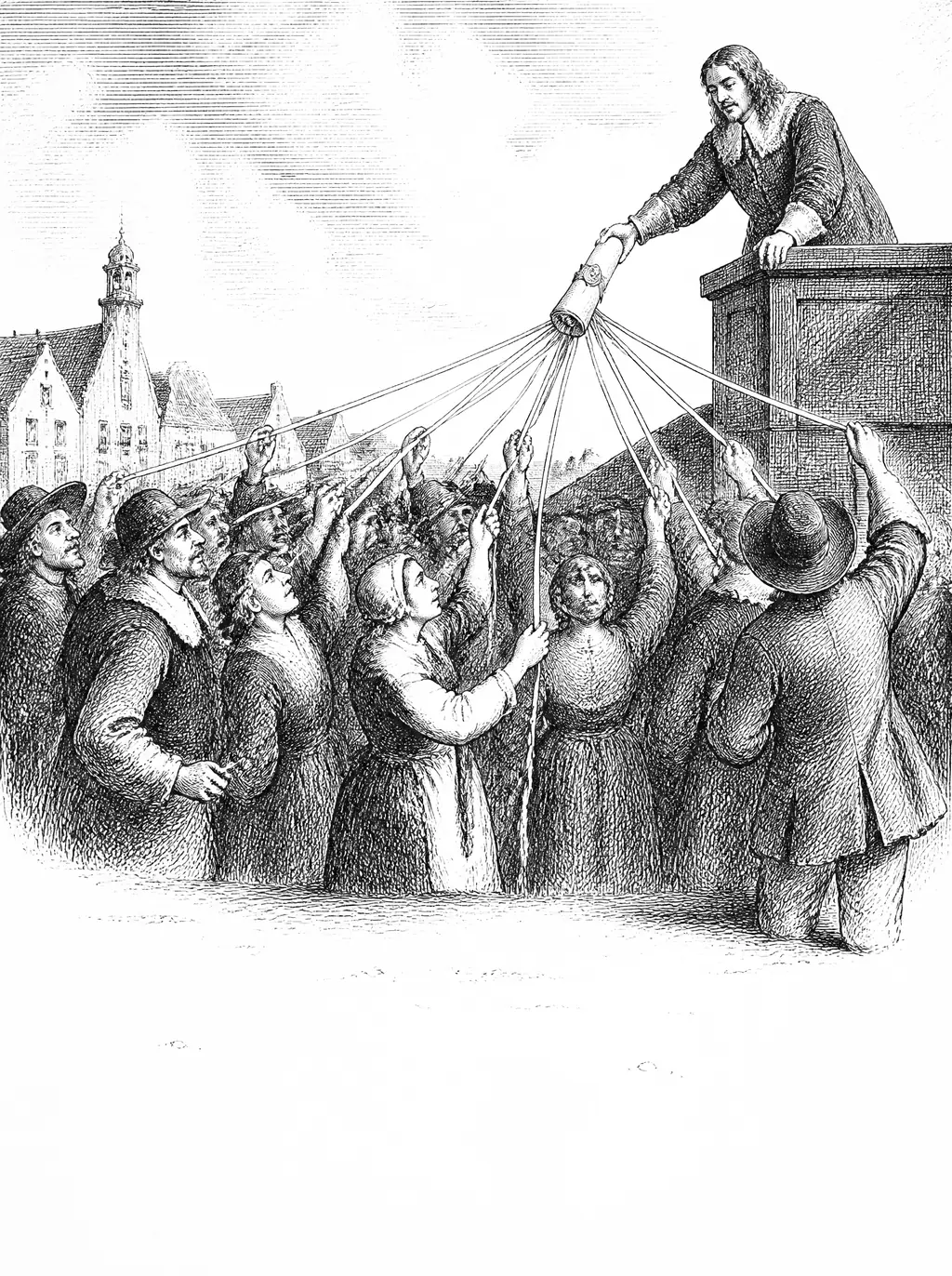
Consent of the Governed
A birthright nobody can sign away for you
Locke starts from a claim that sounds obvious once stated and was genuinely radical in his century: no one is born already owing obedience to any particular ruler. Kings had long claimed authority handed down from God or from conquest. Locke insisted the only real source of legitimate power was something far more ordinary: the agreement of the people being ruled. He wrote this while the king he lived under was claiming exactly the opposite, and while his own patron was being tried for treason. The argument was not a seminar exercise. It was the case for a revolution that had not yet happened, written by a man who expected to be arrested for it.
The world it came from
Locke was physician and secretary to the Earl of Shaftesbury, leader of the opposition to Charles II. Between 1679 and 1681 Shaftesbury tried to exclude the king's Catholic brother James from the succession and failed. The court's defenders were reprinting Robert Filmer's Patriarcha, which derived royal authority from Adam's fatherhood and denied that subjects had ever been free. Locke drafted the Two Treatises in those years to answer Filmer. In 1683, after a plot against the king was exposed and Shaftesbury's allies were executed, Locke fled to Holland. He returned in 1689 behind William of Orange, after James had been driven out, and published the book anonymously that year as if it had been written to justify what had just occurred.
The idea
Men being, by nature, all free, equal, and independent, no one can be put out of this estate, and subjected to the political power of another, without his own consent. Civil society begins only when free people agree to join together for their mutual safety and comfortable living, trading a portion of their natural liberty for the security a shared authority can provide. Consent is not the whole of it. The power handed over is a trust, given for a purpose, the preservation of life, liberty, and property. A government that uses the power for other ends has broken the trust, and the people who gave it may take it back.
How the reasoning runs
Start in the state of nature, where every adult is free and equal under a law of nature that forbids harming another's life, liberty, or possessions. No one there is born subject to anyone else, so subjection must be acquired, and the only way a free person can be bound is by agreeing. Next: people agree because the state of nature lacks a known law, an impartial judge, and a power to enforce judgment, so property is insecure. They form a community and consent to be bound by its majority. The community entrusts government with power for the sake of that security. Therefore the government holds power conditionally, and when it invades the ends it was created to serve, the trust dissolves and power returns to the people.
Seen in life
You buy a flat in a building with a residents' association. You sign the rules, you pay the fee, and when the committee fines you for leaving a bicycle in the hallway you grumble but accept it, because you agreed to the rules and can vote the committee out. Now imagine the committee starts billing you for a garden you cannot use and changes the rules without a meeting. Your obligation shifts. You did not consent to that, and the body that claims your money has stopped doing the thing you gave it money for. Locke says a state is this on a larger scale. Its authority over you lasts as long as it does the job you would have agreed to, and not a day longer.
Why it matters
This flips the usual direction of political authority: instead of power flowing down from a ruler who grants rights to subjects, it flows up from free individuals who grant limited power to a government, on the condition that it serves the purpose they agreed to it for. Break that condition, and the consent, on Locke's account, can be withdrawn. The consequence is a standing test that any government must keep passing. It is not enough that a regime is old, or orderly, or blessed by a church. The question is whether the people it governs would, or do, agree to it, and whether it still protects what they agreed to it for. That test has toppled kings.
“Men being, as has been said, by nature, all free, equal, and independent, no one can be put out of this estate, and subjected to the political power of another, without his own consent.”
From the source
Opening his chapter on the beginning of political societies, Locke states the principle directly: “Men being, as has been said, by nature, all free, equal, and independent, no one can be put out of this estate, and subjected to the political power of another, without his own consent.” The sentence begins Chapter VIII of the Second Treatise. Locke goes on to explain that once a number of people have agreed to make one community, the majority has the right to act for the whole, since a body must move the way its greater force carries it. Later in the chapter he distinguishes express consent, which makes a person a full member, from tacit consent, given by anyone who enjoys the protection of a government's laws.
The pushback
Almost no one now living was ever asked, in any literal sense, to consent to the government they were born under, which makes the whole idea of consent look more like a useful fiction than an actual historical event. Locke's defenders reply that ongoing participation in a society's benefits, property, protection, law, counts as a real, if tacit, form of consent. Hume pressed harder in 1748. A poor peasant who speaks no foreign language and has no money to leave does not consent to his country by staying in it, any more than a man carried aboard a ship while asleep consents to the captain by not jumping into the sea. Where leaving is impossible, staying proves nothing.
The reply
The Lockean tradition has largely conceded the historical point. Few governments were founded by a literal agreement, and tacit consent from people who cannot leave is thin. The reply shifts the ground. Consent, on this reading, is a standard rather than an event: a government is legitimate if it is the kind free and equal people could agree to, and if it keeps the trust such people would have given it. That saves the practical force of the idea, the right to resist a government that has turned against its purpose. It does not save everything. Some philosophers, such as A. John Simmons, have argued that if consent is what makes authority legitimate, then almost no actual state is legitimate. Locke's argument may prove more than he wanted.
Where it went next
Jefferson wrote Locke's principle into the Declaration of Independence in 1776: governments derive their just powers from the consent of the governed, and when a government becomes destructive of its ends, the people may alter or abolish it. Hume's essay on the original contract remains the sharpest reply. Rousseau took the consent idea and asked what people would have to agree to for the agreement to be legitimate. Rawls replaced historical consent with hypothetical consent behind a veil of ignorance in 1971. The Universal Declaration of Human Rights states in Article 21 that the will of the people shall be the basis of the authority of government. Every election, on this view, is a renewal of a consent Locke first said could be withheld.
Where this leads
The state of nature supplies the exact condition Locke's free and equal people are imagined leaving behind, Hobbes's own war of all against all standing as the grim alternative that makes voluntary consent to a shared authority worth choosing at all. Locke's own state of nature is milder than Hobbes's, and the difference matters: because life before government is inconvenient rather than unbearable, people can afford to be choosy about the terms. You own what you work for supplies the thing they are most anxious to protect. Locke says people leave the state of nature chiefly to secure their property, so the labor theory explains what the consent is for.