Symposium · Political Philosophy · Pl. 11Thomas Paine · 1737–1809
Government Is a Necessary Evil
A distinction most people blur
Society and government get talked about as though they were the same thing, both good, both worth defending together. Paine splits them apart in his opening lines: society is produced by our wants and is a positive blessing, while government is produced by our wickedness, and even in its best form is only a necessary evil, never something to celebrate for its own sake. The split does work in the argument that follows. If government is only a tool, then a bad tool can be thrown away, and the loyalty people feel to their country need not extend to the king who runs it. Paine needed his readers to feel that difference before he could ask them to rebel.
The world it came from
Paine was a failed corset-maker and dismissed excise officer from Norfolk who arrived in Philadelphia in late 1774 with a letter of introduction from Benjamin Franklin and little else. Fighting between colonists and British troops began at Lexington in April 1775, yet most colonial leaders still hoped for reconciliation with George III and blamed his ministers. Common Sense appeared anonymously in January 1776 and sold in numbers no American pamphlet had approached; by some estimates well over a hundred thousand copies within months. It made the case that the quarrel was with monarchy itself, not with a particular minister. Six months later Congress declared independence. Paine later carried the same argument to France, sat in its National Convention, and was jailed by it.
The idea
Society in every state is a blessing, but government even in its best state is but a necessary evil; in its worst state an intolerable one. If conscience were clear and uniformly obeyed, no government would be needed at all; because it is not, people surrender part of their freedom to secure the rest, choosing the lesser of two evils rather than acquiring a genuine good. Two things follow. Since government exists only to secure freedom and safety, the form that does this most cheaply and simply is the best. And since it is a cost, not a blessing, no one owes it reverence, only a periodic check that it is still worth paying for.
How the reasoning runs
Paine begins with a thought experiment. Picture a few people settling an empty country. Their wants drive them together; that is society, and it costs nothing. At first they need no government, because each is a check on the others. As numbers grow and virtue slackens, some fail their duty, and the settlers set up rules and choose a few to make them. That is government, and it exists only because conscience proved unreliable. So its purpose is fixed: security, purchased with a slice of freedom. Next, since the purpose is simple, the machinery should be too; a complicated constitution hides blame. Therefore the English system, with its king and lords layered on the commons, fails the test, and a colony that copied it would be copying the disease.
Seen in life
You join a group of friends who rent a shared workshop. For the first year nobody needs rules: everyone cleans up, everyone pays, everyone is careful with the tools. Then the group grows to thirty. Someone leaves a saw running, someone stops paying, and one evening the argument about whose turn it is becomes a shouting match. So you write bylaws, elect a treasurer, and set fines. The workshop is no worse a place for it, but notice what changed. The rules exist because trust ran out. Nobody loves the treasurer the way they loved the first year. Paine says that a state is this at scale. Be grateful for the workshop. Keep an eye on the treasurer.
Why it matters
This sets a permanently skeptical baseline for evaluating any government: not gratitude for its existence, but a constant, sober accounting of whether it is currently the smallest necessary evil available, or has grown into something worse than the disorder it was meant to prevent. It gives ordinary people a standing reason to keep questioning authority rather than simply trusting it. It also separates two loyalties that rulers prefer to keep fused. You can love your country, your neighbors, and the life you have built together, and owe nothing to the officials who administer it beyond the service they render. That separation is what makes it possible to change a government without feeling that you have betrayed a people.
“Society in every state is a blessing, but government even in its best state is but a necessary evil; in its worst state an intolerable one.”
From the source
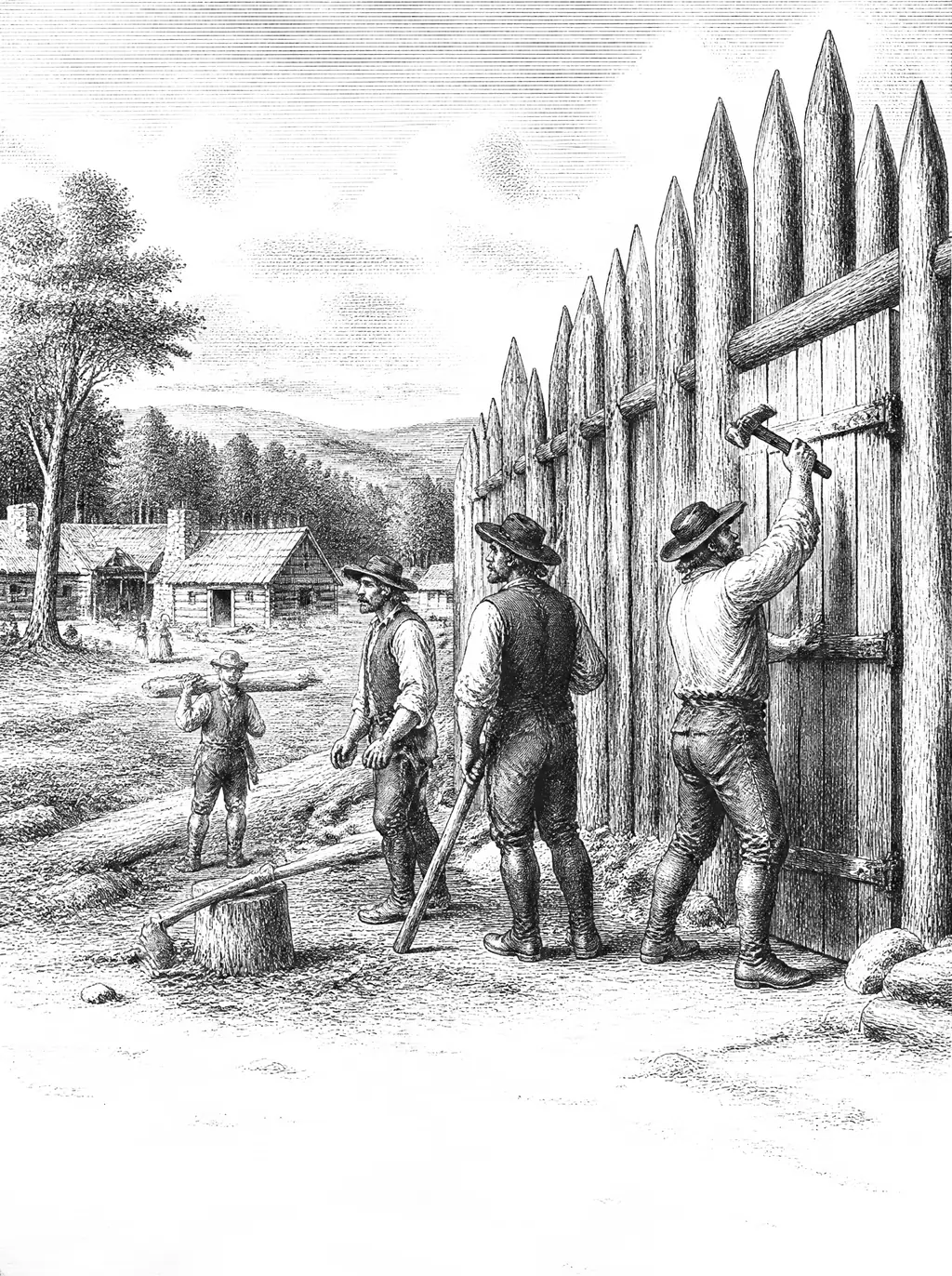
Paine opens Common Sense with the distinction stated plainly, before a single word is spent arguing for independence: “Society in every state is a blessing, but government even in its best state is but a necessary evil; in its worst state an intolerable one.” The sentence comes from the first section, on the origin and design of government in general. Paine follows it with an image that carries the whole argument: government, like dress, is the badge of lost innocence. The palaces of kings are built on the ruins of the bowers of paradise. He then walks the reader through his settlers in the empty country, showing how rules arise once the first trust wears thin.
The pushback
Doesn't calling all government an evil, even in its best form, undersell the genuine goods a well-run state can provide, infrastructure, justice, defense, that society alone could rarely produce or coordinate on its own? Paine's own answer is that these goods are still purchased at the cost of surrendered freedom, a price worth naming honestly even when it is worth paying. A second objection is that the distinction cannot hold. Society, once it grows past a village, is made of institutions: courts, schools, markets, roads. Strip those away and the blessing Paine praises shrinks to a handful of families. If society at scale is only possible through government, then calling one a blessing and the other an evil divides something that comes in one piece.
The reply
Paine's defenders say the second objection mistakes a claim about value for a claim about separability. He never argues that society can run without government past a certain size; his settlers set one up as soon as it is needed. The point is that the two things earn different attitudes. You are grateful for cooperation; you are watchful of coercion. On the first objection they add that Paine himself later proposed public pensions, child allowances, and a tax on inherited land, in Agrarian Justice and the second part of Rights of Man, so he plainly thought government could do good. What his framework does not settle is where necessary ends and excessive begins. That line he left to each generation to draw.
Where it went next
The Declaration of Independence followed Common Sense by six months, and Paine's plain style, written for people who did not read Locke, became the model for political argument in America. His Rights of Man of 1791 answered Burke and sold across Britain until the government prosecuted him for it. Thoreau opened Civil Disobedience in 1849 with the motto that the best government governs least, and pushed it toward none at all. Libertarian and anarchist traditions both claim the necessary-evil line, and Robert Nozick's minimal state of 1974 is a philosophical defense of it. Yet the same Paine who called government an evil also drafted one of the first welfare programs. Both of his descendants are quoting him correctly.
Where this leads
The state of nature supplies the darker alternative Paine's necessary evil is actually being weighed against, Hobbes's own war of all against all standing as the exact condition government's real cost is meant to be judged a bargain compared to. Paine's settlers are Hobbes's people with the fear turned down: they cooperate before they need rules, which is why he can call government a cost and Hobbes must call it a rescue. Consent of the governed is the tradition Paine was writing inside. Locke gave him the claim that government is a trust for a purpose. Paine gave it a tone, skeptical and unceremonious, that Locke's readers had not heard before.