Symposium · Political Philosophy · Pl. 6Niccolò Machiavelli · 1469–1527
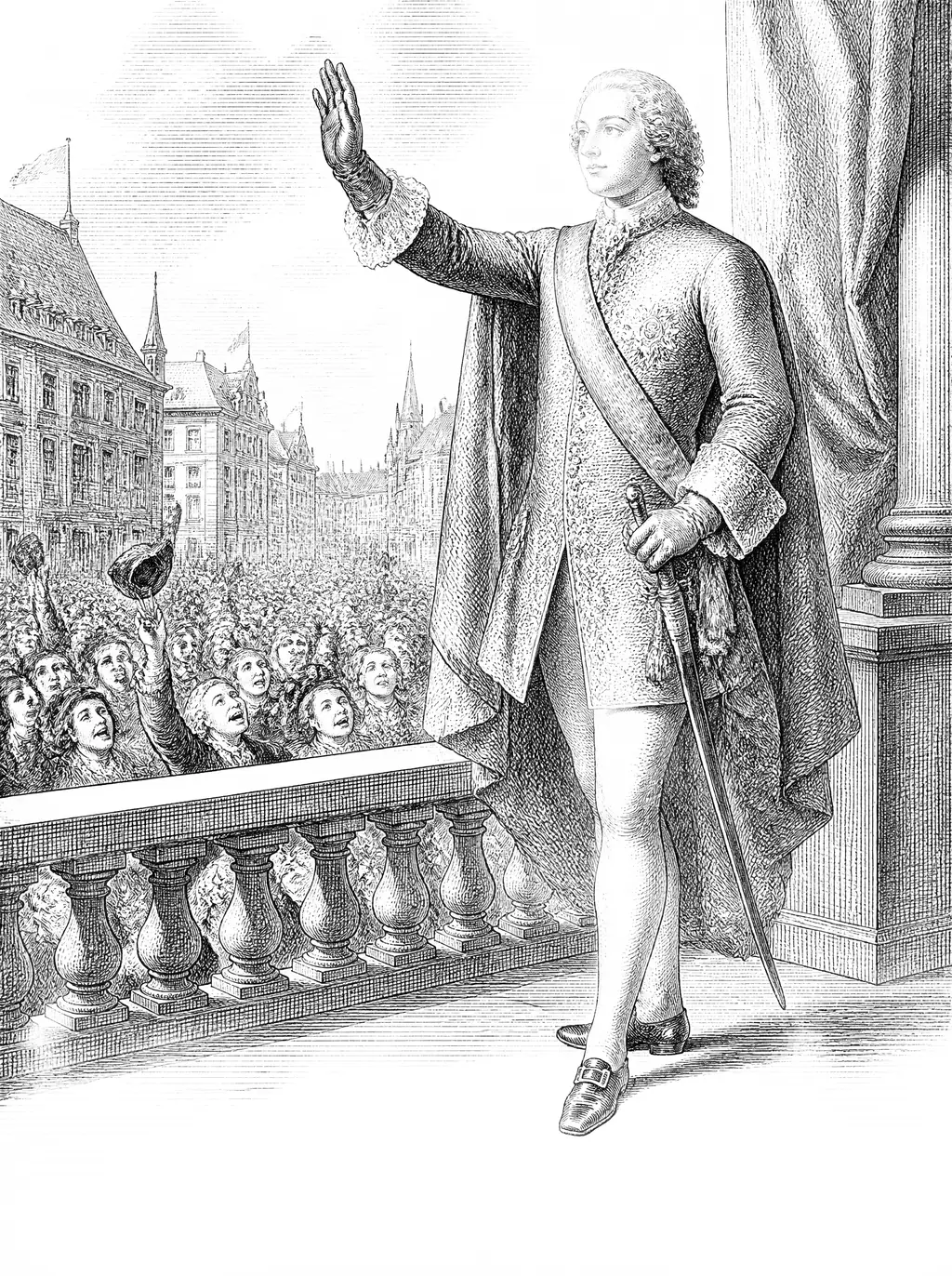
Better Feared Than Loved
A question most advisors dodged
Court advisors before Machiavelli tended to tell princes what flattered them: rule with virtue, and love will follow, and love will keep you safe. Machiavelli, having watched Italian princes rise and fall up close, asked the blunter question directly instead, and gave an answer few of his predecessors were willing to put in writing. He had seen the gentle rulers lose their states and the hard ones keep them. He had also seen a hard ruler, Cesare Borgia, lose everything the moment his luck turned. So the question was not academic. It was the difference between a prince who died in his bed and one who did not.
The world it came from
Machiavelli wrote The Prince in 1513, in the year after the Florentine republic he had served for fourteen years collapsed and the Medici returned behind Spanish troops. He had been dismissed, accused of conspiracy, and tortured, and he wrote from enforced retirement on his farm. Italy had been invaded repeatedly since the French crossed the Alps in 1494, and its princes changed with every campaign. As a diplomat he had spent months at the court of Cesare Borgia, and had watched Borgia pacify the Romagna by cruelty and then discard the cruel lieutenant who had done it. The examples in the chapter on fear and love come from that experience, not from books.
The idea
One should wish to be both loved and feared, but since the two are difficult to unite in one person, it is much safer to be feared than loved, if one of the two must be given up. People are ungrateful, fickle, and false; they offer everything when danger is distant, and abandon you the moment it actually arrives, but fear of punishment never leaves them the same way. The key word is safer, not better. Machiavelli is not ranking the two feelings by their worth. He is asking which one the prince can keep hold of when the ground shifts, and love, on his account, is held by other people.
How the reasoning runs
Begin with human beings as Machiavelli says they are: quick to promise, slow to deliver, loyal while loyalty is cheap. Love is a bond of obligation, and men break obligations whenever breaking them pays. Fear is a bond of dread, and dread of punishment does not lapse when circumstances change. So love is held by the subject, who can withdraw it, and fear is held by the prince, who controls what is punished. Next, a prince must build on what he controls, not on what others grant. Therefore, when the two cannot be combined, fear is the sounder foundation. Then the limit: fear must never become hatred. Keep your hands off your subjects' property and their women, and you can be feared without being hated.
Seen in life
You are promoted to run a team you used to belong to. For the first months you rule by goodwill: you cover for people, bend deadlines, and are liked. Then the budget is cut and you must choose who loses a project. The goodwill evaporates in a week. The people you protected are now the ones circulating complaints, because affection is a debt they can stop paying whenever it becomes expensive. What they respect afterward is something plainer: that you set rules, applied them to everyone, and did not flinch. Machiavelli would say you learned the lesson late but correctly. He would also say to watch the line. The manager who is feared can keep a team; the one who is hated cannot.
Why it matters
This is a foundational statement of political realism: describing how power actually tends to work among self-interested people, rather than how a moral treatise wishes it would work. Machiavelli is not recommending cruelty for its own sake; he is arguing that relying on people's goodwill alone is a strategically weak foundation for holding power at all. The deeper point is about dependence. A ruler who lives on love has handed the terms of his survival to the people who feel it, and they can revise those terms at any time. A ruler who is feared holds the terms himself. Whether that is a decent way to govern is a separate question, and Machiavelli does not pretend to have settled it.
“It may be answered that one should wish to be both, but, because it is difficult to unite them in one person, it is much safer to be feared than loved.”
From the source
Machiavelli states the calculation directly: “It may be answered that one should wish to be both, but, because it is difficult to unite them in one person, it is much safer to be feared than loved.” The sentence ends: when, of the two, either must be dispensed with. The passage comes from Chapter XVII, on cruelty and clemency. Machiavelli opens it by arguing that Cesare Borgia's cruelty restored order to the Romagna, while Florence, wishing to avoid a reputation for cruelty, allowed Pistoia to be destroyed by faction. He closes it with the qualification that carries the real weight: a prince must make himself feared in such a way that, if he does not win love, he at least escapes hatred.
The pushback
Doesn't ruling primarily through fear invite conspiracy and rebellion the moment weakness shows, since fear commands compliance without ever securing genuine loyalty? Machiavelli anticipates this directly, adding immediately that a prince must avoid being hated even while being feared, a much narrower and harder balance than the blunt slogan alone suggests. A second objection comes from evidence rather than principle. Studies of why people obey the law, such as Tom Tyler's work in the 1990s, find that compliance rests far more on whether people see authority as legitimate than on their fear of punishment. If that is right, fear is not the safer foundation but the more expensive one, requiring constant enforcement that legitimacy gets for free.
The reply
Machiavelli's defenders point out the scope of the claim. The Prince addresses a new ruler holding a state in crisis, where loyalty has not had time to form and enemies are already inside the walls. In the Discourses, his longer book on republics, Machiavelli says the people are steadier than any prince and that a free city defends itself better than a subject one. Read together, the two books say fear is a tool for emergencies and legitimacy is the goal for peacetime. That answers the first objection well. The second it answers only partly. Machiavelli assumed compliance was always bought by one of two currencies, love or fear, and the evidence suggests there is a third, the sense that authority is fair, which he never priced.
Where it went next
Hobbes built a whole theory of the state on the same passion, calling fear the one motive a sovereign can always count on. Frederick the Great wrote an Anti-Machiavel in 1740 to refute the book, then ruled as if he had memorized it. The word Machiavellian entered English within decades as a synonym for ruthless calculation, which is how Shakespeare's villains use it. In 1958 Leo Strauss called Machiavelli a teacher of evil and spent a book taking him seriously. Psychologists in 1970 built a personality scale, the Mach IV, from statements in The Prince to measure manipulativeness. And every leadership course that warns a new manager against needing to be liked is repeating Chapter XVII in gentler words.
Where this leads
The fox and the lion is Machiavelli's own account of the further skill this balance actually requires, arguing that fear and force alone are never quite enough without the sharp cunning needed to see real danger coming before it ever arrives. The state of nature shows what happens when Machiavelli's insight is scaled up from a prince to a whole people. Hobbes takes the claim that fear is the reliable passion and makes it the foundation of government itself: people submit to a sovereign because they dread each other more than they dread him. Where Machiavelli offers fear as a ruler's tool, Hobbes offers it as the reason there are rulers at all.