Symposium · Aesthetics · Pl. 14Leo Tolstoy · 1828–1910
The Test of Art Is Infection
A test that skill alone cannot pass
Tolstoy rejects centuries of beauty-based definitions of art in one stroke, proposing instead a single practical test: does a work transmit real feeling from the person who made it to the person experiencing it? Technical brilliance without that transmission, on his account, is craft, not art, however impressive it looks on the surface. He gives a homely example. A boy who once met a wolf tells the story so that his hearers feel the fright he felt: that is art. If he invents the wolf but makes the fear real, still art. If he tells it flatly, however true, it is not. The test asks one thing of a work, and you can feel whether it passes.
The world it came from
Tolstoy wrote What Is Art? over fifteen years and published it in 1897, at sixty-eight, after the religious crisis that followed Anna Karenina. He had renounced his earlier novels, given up meat and property in principle, and become a Christian anarchist with followers across Europe. Russian censors cut the book; the full text appeared first in English translation. The art world he attacked was the one of Wagner's Bayreuth, Baudelaire, the Symbolists, and the Petersburg opera, art that in his view cost peasants their labour and gave them nothing back. He had read every theory of beauty from Baumgarten onward and found them all circular. The question he was answering was blunt: what justifies the enormous expense of art, in money and lives, and what would be worth it?
The idea
Art is a human activity, consisting in this, that one man consciously, by means of certain external signs, hands on to others feelings he has lived through, and that other people are infected by these feelings, and also experience them. A peasant's simple song that genuinely moves its hearers counts as art on this view, while a technically dazzling but emotionally dead performance does not. Three things decide how infectious a work is: the individuality of the feeling, the clearness with which it is conveyed, and above all the artist's sincerity. Infection settles whether something is art. A second test settles whether it is good art: the feeling transmitted must be one that unites people, in religious perception or in ordinary fellowship, rather than one that divides them.
How the reasoning runs
Tolstoy argues from a definition and a diagnosis. First, every theory of art built on beauty fails, because beauty turns out to mean whatever pleases the theorist's class. So define art by what it does, not what it is. Second, what art does, in every case people call art, is transmit feeling: someone felt something, and the work makes others feel it too. Third, transmission has degrees, depending on how sincere, particular, and clear the artist was. Fourth, a feeling can be good or bad for the people it joins. The best art transmits feelings that draw all people together, the worst feelings available only to the idle few. So the test of art is infection, and the test of good art is universal brotherhood.
Seen in life
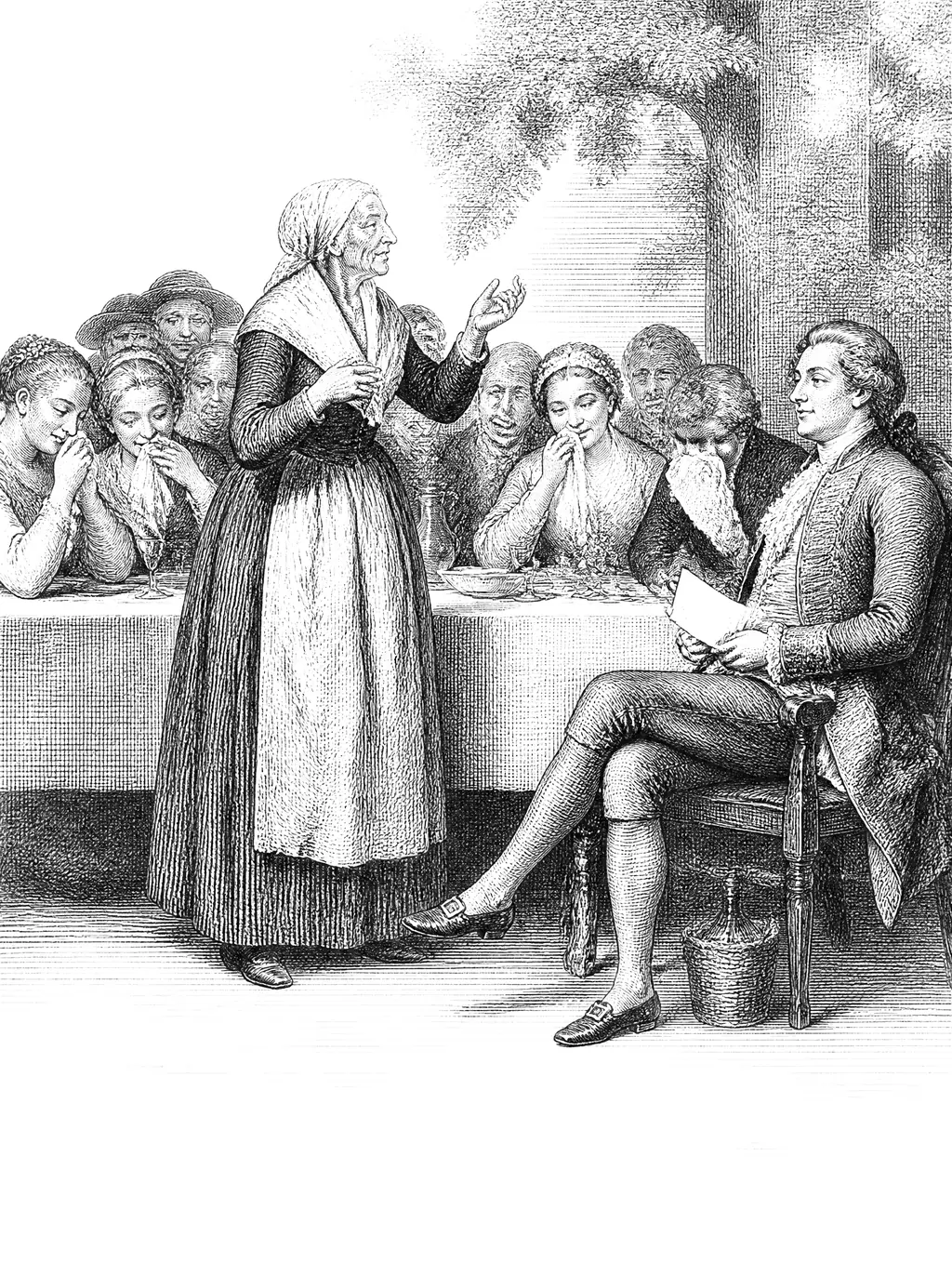
You are at a wedding, and the best man's speech is polished, funny, and clearly written by someone who has done this before. The room applauds and forgets it. Then the bride's grandmother stands up unplanned, says four halting sentences about the day the bride was born, and half the room is in tears, including people who never met her. Tolstoy's test has just run in front of you. The speech had every virtue except one: nothing passed from speaker to listener except admiration. The grandmother had none of the craft and all of the sincerity, and the feeling she had lived through went straight into a hundred strangers. He would call the second art and the first a performance.
Why it matters
This shifted the test for art away from craftsmanship, beauty, or cultural prestige and toward a single measurable question: did the feeling actually transmit from one person to another? It let Tolstoy attack celebrated works, including some of his own novels, as failed art, while defending simple folk songs and stories as genuine successes by his own severe standard. It also refuses to let art off the moral hook. Most theories give art a protected zone where only aesthetic questions apply; Tolstoy denies the zone exists. If art is a way of joining people in feeling, then which feelings it spreads is the most important thing about it, and a work that unites a crowd in contempt has done harm, however fine its form.
“Art is a human activity, consisting in this, that one man consciously...hands on to others feelings he has lived through, and that other people are infected by these feelings, and also experience them.”
From the source
Tolstoy gives his full definition without hedging: “Art is a human activity, consisting in this, that one man consciously...hands on to others feelings he has lived through, and that other people are infected by these feelings, and also experience them.” The elided phrase is by means of certain external signs. He calls this transmission simply infection. The definition ends chapter five of What Is Art?, in Aylmer Maude's translation, which Tolstoy authorised. The preceding chapters survey a century of European aesthetics and conclude that every definition based on beauty reduces to what pleases us. Chapter fifteen adds the three conditions of infectiousness, and chapter sixteen the demand that the feelings transmitted be ones that unite rather than divide humanity.
The pushback
Doesn't reducing art to infectiousness risk elevating cheap emotional manipulation, a propaganda poster or a tearjerker advertisement, above genuinely difficult and demanding work that moves audiences more slowly and thoughtfully? Tolstoy tried to guard against this by demanding sincerity and moral seriousness in the feeling transmitted, though critics have questioned whether that standard reliably separates the two. The second objection is Tolstoy's own verdicts. By his test he rejected King Lear, most of Beethoven, Wagner entirely, and his own War and Peace, while approving Uncle Tom's Cabin and Dickens. A theory whose author applies it honestly and reaches those results has either found something deep about art or has quietly measured it against one man's late religion.
The reply
Tolstoy's defence against the manipulation charge is sincerity: the advertiser has not lived through the feeling he transmits, and infection from a counterfeit is weaker and shorter. That is partly true, since audiences do learn to feel the fake, but it is an empirical bet rather than a safeguard. To the charge about his verdicts, the honest reply is that the theory and the judgments are separable. You can accept that art is the transmission of lived feeling and still find that Lear transmits more than Tolstoy could receive in 1897. His followers have mostly done exactly that. What survives is the shift he forced: from asking whether a work is beautiful to asking what it does between people, a question that no later theory has been able to ignore.
Where it went next
What Is Art? made Tolstoy the first great novelist to attack high art from inside it, and the shock has not worn off. George Orwell's essay 'Lear, Tolstoy and the Fool' (1947) took the book seriously enough to answer it at length. R. G. Collingwood's Principles of Art (1938) built a rival expression theory, on which art clarifies emotion rather than transmitting it, partly to fix what he thought Tolstoy got wrong. The book fed socialist realism's demand that art serve the people, and later the argument over accessibility in public arts funding. Every debate about whether a work connects with an audience, in a writers' room or a marketing meeting, is running Tolstoy's test without his name.
Where this leads
The point of pity and fear shows Aristotle reaching for a very different measure of tragedy's value centuries earlier, judging it not by whether feeling spreads honestly between people but by whether it discharges pity and fear inside a single audience member in a healthy, well-managed way. Life imitates art is the opposite temperament. Wilde, writing a few years before Tolstoy, wanted art free of sincerity, morality, and the audience's needs; Tolstoy wanted it answerable to all three. They agree on one thing only, that art changes people, and disagree entirely about whether that change should be judged. Read them together as the two poles of the 1890s.