Symposium · Pragmatism · Pl. 7William James · 1842–1910
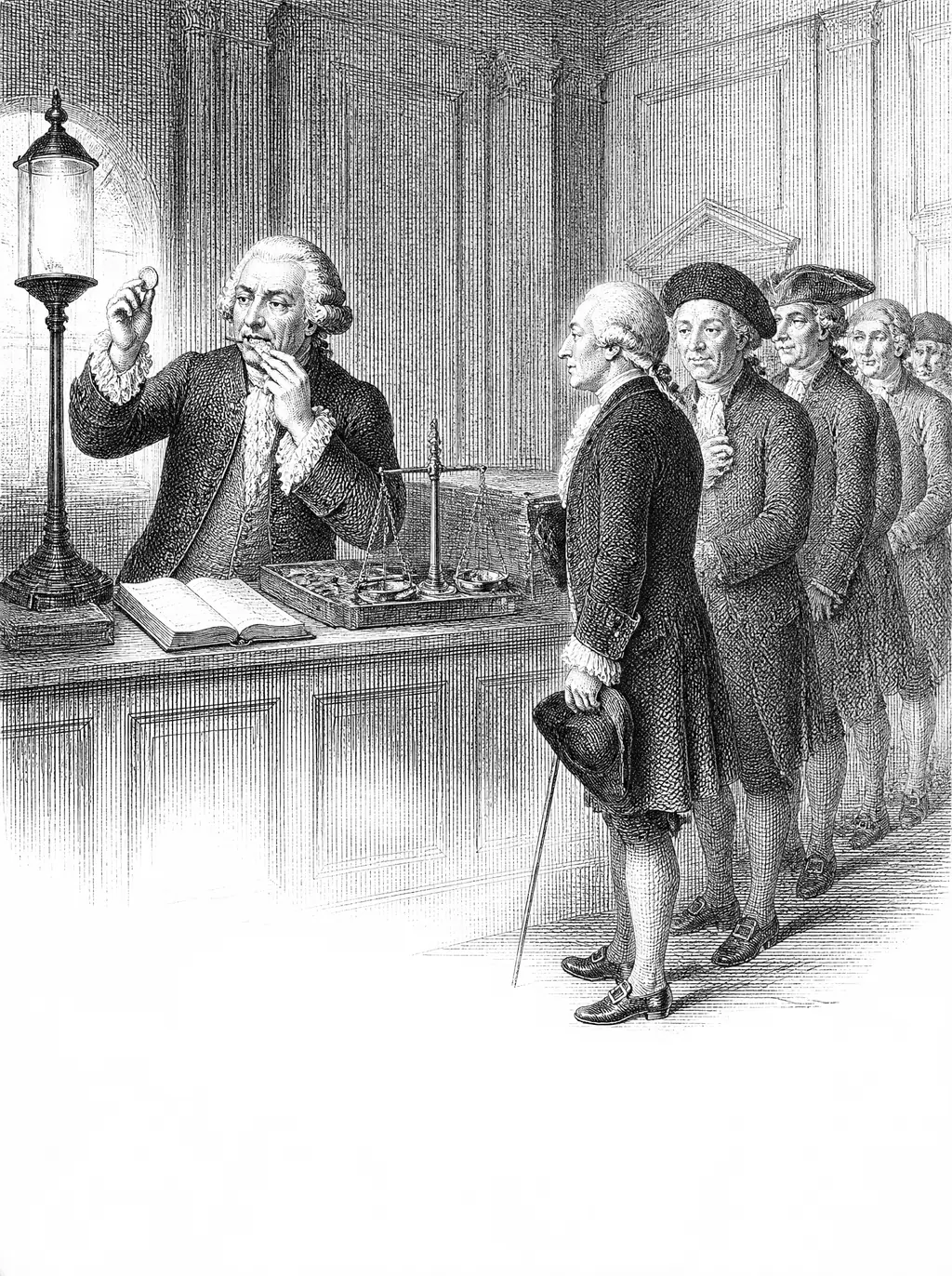
The Cash-Value of an Idea
Words that promise but never pay
James complains that many philosophical terms function as what he calls solving names, words that feel like they answer everything simply by naming some grand principle, God, Matter, Reason, the Absolute. Once you possess the word, the temptation is to stop asking what practical difference actually follows from holding it. He had watched it happen in his own lecture halls. A student asks what holds the world together, is told the Absolute, and goes home satisfied. James wanted to know what that student would now do differently on Monday. If nothing, the word had bought him nothing.
The world it came from
James delivered the Pragmatism lectures at the Lowell Institute in Boston in late 1906 and again at Columbia in early 1907, and published them that year. He was sixty-five, a Harvard professor of psychology turned philosopher, famous since The Principles of Psychology in 1890 and The Varieties of Religious Experience in 1902. Peirce, his old friend from the Metaphysical Club, had coined the pragmatic maxim thirty years earlier; James credited him by name and then took the idea somewhere Peirce disliked. The opponents in the room were the absolute idealists, above all Josiah Royce, James's colleague and neighbor, and F. H. Bradley in Oxford. James's problem was to show that their system, whatever its beauty, made no difference anyone could live by.
The idea
You must bring out of each word its practical cash-value, set it at work within the stream of your experience. Rather than closing an inquiry, a good philosophical idea should open one, functioning less like a final answer and more like a program indicating concretely how existing realities might actually be changed or better understood. Cash-value is a demand, not a dismissal. James is not saying that God or the Absolute are empty. He is saying that if they mean anything, they must mean something for experience: a difference in what you expect, what you fear, or how you act. Find that difference and you have found the idea. Fail to find it and you were holding a receipt for nothing.
How the reasoning runs
Step one: to understand a word is to know what difference it makes. Step two: a difference that makes no difference to anyone's experience is no difference at all. Step three: so the meaning of a philosophical term is the set of experiences you would expect if it were true and not if it were false. Step four: the same test applies to truth. An idea is true, James says, insofar as it works: it leads you through experience without surprises and pays off in prediction. Step five: truth, then, is not a static relation but something that happens to an idea as it is verified. Conclusion: cash-value is both the meaning of a word and the measure of its truth.
Seen in life
Your company has spent a year on a mission statement. It says you are customer-obsessed. Run the cash-value test. What would a visitor see that they would not see at a company without the phrase? Which meeting ran differently last week because of it? Who was hired, or not hired, or overruled? If you can point to those things, the phrase is earning its keep, and it means exactly the sum of them. If you cannot, the phrase is a solving name: it feels like an answer and does no work. James would tell you to stop defending the words and go find the experiences. Either they exist, or they do not, in which case the statement is a receipt with nothing behind it.
Why it matters
This gave pragmatism its most memorable metaphor, treating abstract ideas as currency that must be exchangeable for something concrete rather than hoarded as impressive-sounding but practically useless capital. It offered a working test for separating genuinely useful philosophical concepts from ones that merely sound profound without doing any real work. It also changed what a philosophical argument is for. On James's view, you do not win by showing a system is consistent. You win by showing what it does for the person who holds it, and you lose when the answer is nothing. That standard is harsh, and it is the one most people already use for everything except philosophy.
“You must bring out of each word its practical cash-value, set it at work within the stream of your experience.”
From the source
James states the demand directly: “But if you follow the pragmatic method, you cannot look on any such word as closing your quest. You must bring out of each word its practical cash-value, set it at work within the stream of your experience.” A word that cannot be spent this way, he implies, was never really earning its philosophical keep. The passage is from the second lecture, What Pragmatism Means, which opens with the story of a squirrel circling a tree and a camping party arguing whether the man chasing it goes round the squirrel. James settles the dispute by asking what round means in practice, and then generalizes the move. Theories, he says there, become instruments rather than answers.
The pushback
Doesn't reducing meaning to practical cash-value risk dismissing ideas whose value is genuinely theoretical or aesthetic rather than immediately actionable, treating philosophy as though it owed everyone a concrete payoff on demand? James's defenders reply that cash-value covers a broad range of experiential difference, not merely narrow financial or technological usefulness. The harder objection is Russell's. If truth is what works, then a comforting falsehood that works is true, and a painful fact that works badly is false. James seems to have confused what makes an idea true with what makes it welcome. Bertrand Russell put this sharply in 1908, and G. E. Moore made a similar case; the charge that pragmatism licenses wishful thinking has never entirely gone away.
The reply
James's reply is that his critics read working too narrowly. An idea works, in his sense, only if it agrees with the rest of what you know and survives every experience that could contradict it; a comforting falsehood fails that test the first time reality pushes back. He also insists that verification is a process and that most truths are held on credit, verified indirectly by the ideas they cohere with. That answers Russell on ordinary facts. It answers him less well on the cases James most cared about: religious belief, where the pushback from reality may never come. There James retreats to The Will to Believe and to a defense of the right to believe in advance of evidence, which is a different claim, and he knew it.
Where it went next
Dewey adopted the instrumental view of ideas and stripped out the religious use. Peirce was so unhappy with James's version that in 1905 he renamed his own view pragmaticism, a word he said was ugly enough to be safe from kidnappers. In Europe, F. C. S. Schiller championed James in Oxford, and Russell and Moore attacked him. The idea went quiet for half a century and returned through Richard Rorty, whose 1979 Philosophy and the Mirror of Nature revived James's picture of truth as what proves good in the way of belief. Hilary Putnam argued for a more careful James against Rorty's looser one. The phrase cash-value has passed into ordinary English, usually without its owner's name attached.
Where this leads
The prophecies of what the courts will do shows Oliver Wendell Holmes applying a strikingly similar pragmatic instinct to legal philosophy, refusing to let grand words like duty and right stand unexamined, and insisting instead on cashing them out in terms of what courts will actually, concretely do. The will to believe is James's other half. Cash-value tells you how to test a belief once you hold it. The will to believe asks what you are entitled to do when the test cannot be run, when a question is live, forced, and momentous, and no evidence will arrive in time. Read the two together and James's whole view of belief comes into focus: pay for what you can, and be honest about the rest.