Symposium · Pragmatism · Pl. 10Charles Sanders Peirce · 1839–1914
The Irritation of Doubt
Doubt as a felt discomfort
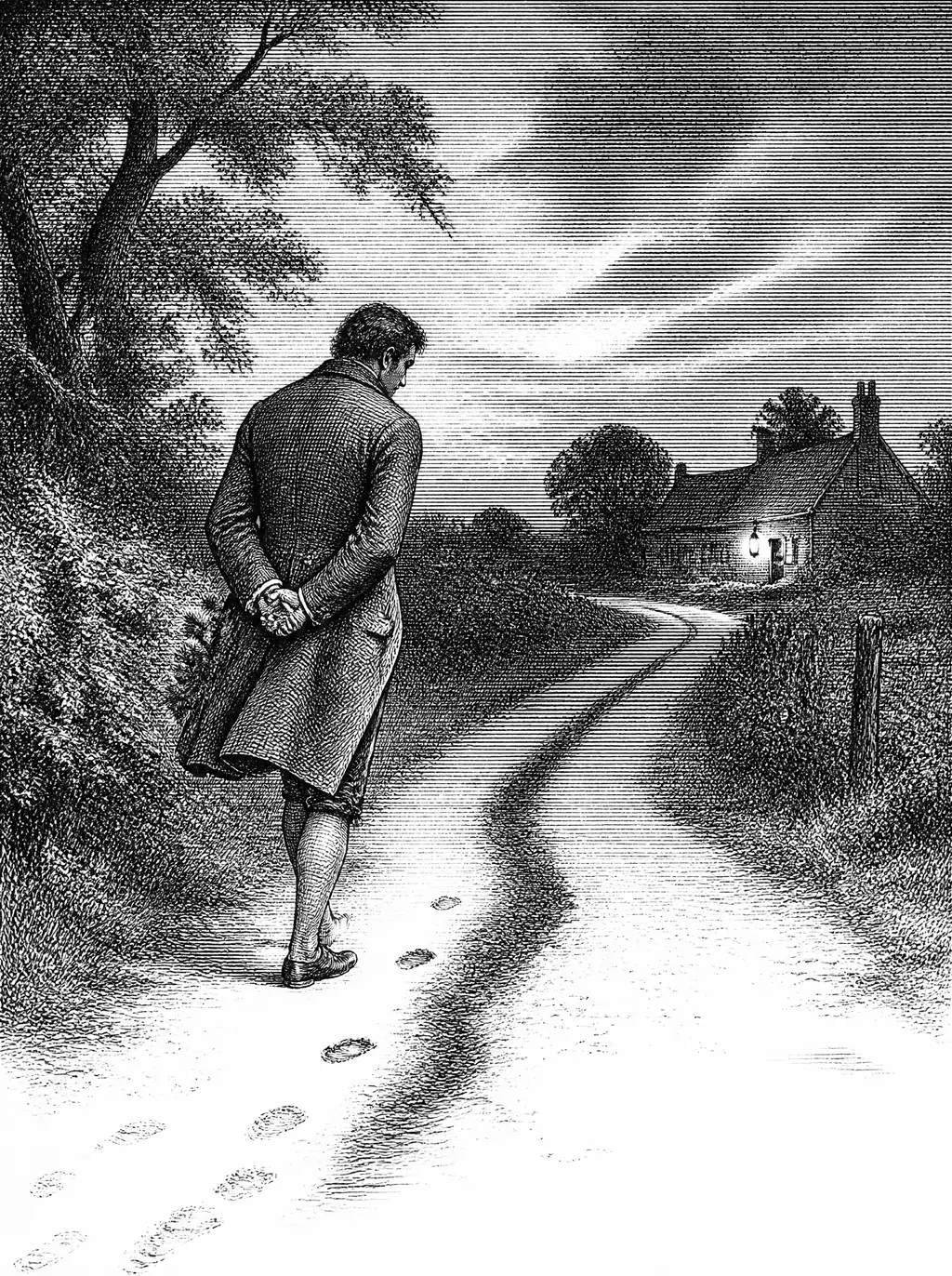
Peirce treats doubt not as an abstract epistemological problem but as an uncomfortable psychological state, closer to a physical irritation than a puzzle to be solved for its own sake. Belief, correspondingly, is simply whatever state relieves that discomfort, whether or not it happens to be true in some further, grander sense. You know the feeling. A question lodges in your mind on the walk home and will not leave until you settle it, one way or another. Peirce starts his whole theory of knowledge from that itch, and he wants to know which ways of scratching it actually last.
The world it came from
Peirce published The Fixation of Belief in Popular Science Monthly in November 1877, the first of six papers he called Illustrations of the Logic of Science. He was thirty-eight and employed not by a university but by the United States Coast Survey, measuring gravity with pendulums. A few years earlier he had met with William James, Chauncey Wright, and Oliver Wendell Holmes in the Cambridge discussion group later remembered as the Metaphysical Club. Darwin's Origin of Species was less than twenty years old, and the essay opens with a history of scientific method from Bacon to Lavoisier to Darwin. The question Peirce was answering was a working scientist's question: what does science do that other ways of settling belief do not?
The idea
The irritation of doubt causes a struggle to attain a state of belief. I shall term this struggle inquiry. Since the sole practical function of inquiry is to end this uncomfortable irritation, Peirce argues, any method that reliably produces settled belief, even one having nothing to do with evidence or reasoning, will satisfy the felt demand that inquiry is actually responding to. Belief, for Peirce, is a habit: a rule you are prepared to act on. Doubt is the absence of such a habit, and it is unpleasant precisely because it leaves you unable to act. That is why the mind will take almost any exit from it.
How the reasoning runs
Step one: a belief is a habit, and doubt is what you feel when no habit is available. Step two: because doubt is unpleasant, any method that ends it will be tried. Peirce lists four. Tenacity: cling to what you already believe. Authority: let a church or state decide for everyone. The a priori method: believe whatever seems agreeable to reason. Science. Step three: the first three fail the same way. Tenacity collapses when you meet someone who thinks differently. Authority cannot regulate every opinion, and travellers see other regimes. The a priori method makes belief a matter of fashion. Only a method that fixes belief by something external to us, a reality independent of what anyone thinks, can settle doubt for good.
Seen in life
Your startup's sign-up rate drops by a third in a month. Doubt arrives, and watch how the room tries to end it. The founder says the product is fine and the market is noisy: tenacity. The head of sales says the investors want a pricing change, so a pricing change it is: authority. The designer says it stands to reason that people hate the new form: the a priori method. Each of these will settle the room for a week. Then a rival launches, or a customer writes in, and the doubt is back. The one move that holds is the boring one. Split the traffic, change one thing, and let the numbers settle it.
Why it matters
This reframed the theory of knowledge around a concrete psychological mechanism rather than an abstract search for certainty, letting Peirce compare rival methods of fixing belief, tenacity, authority, and reasoned inquiry, by how well each one actually delivers the stable settlement that doubt demands. The payoff for you is a diagnostic. Whenever you feel a belief settling, ask which method just settled it. Relief is not evidence. A belief that arrived because it was comfortable, or because someone with a title said so, has ended your doubt without touching the world, and the world will reopen the question when it likes.
“The irritation of doubt is the only immediate motive for the struggle to attain belief. Hence, the sole object of inquiry is the settlement of opinion.”
From the source
Peirce states the mechanism plainly: “The irritation of doubt is the only immediate motive for the struggle to attain belief. Hence, the sole object of inquiry is the settlement of opinion.” He goes on to note that a belief need only feel true to satisfy this demand, whether or not it is true in fact. The essay appeared in Popular Science Monthly in November 1877 and is the first of the Illustrations of the Logic of Science. Its last pages describe the scientific method as the only one whose fundamental hypothesis is that there are real things whose characters are entirely independent of our opinions about them. That hypothesis, Peirce says, is one every reader already relies on whenever they reason.
The pushback
Doesn't reducing inquiry to the relief of discomfort risk endorsing any method that produces confident, settled belief, however irrational, so long as the irritation genuinely goes away? Peirce anticipates exactly this worry, and spends much of the essay arguing that only the scientific method reliably produces a settlement that later experience will not simply unsettle again. A harder objection comes from the psychology. Real people do not act like Peirce's inquirer. Doubt is often pleasant; a good puzzle is something we seek out. And plenty of people live comfortably with unsettled questions for decades. If doubt is not always an irritation, the motor of the whole account stalls.
The reply
Peirce separates living doubt from paper doubt. Writing that you doubt something in a notebook changes nothing; a doubt only counts when it actually blocks your action. The puzzle-lover has a living doubt with a small stake. The person who lives calmly with an open question has, in Peirce's terms, settled on the belief that it does not matter, which is a belief like any other. On the deeper worry the answer is only partial. The essay shows why the first three methods fail, but its case for science rests on assuming that there are real things independent of our opinion. Peirce admits this openly. He says the assumption is one nobody's practice ever really doubts, which is an argument from behavior, not a proof.
Where it went next
Dewey took the essay's shape and built a theory of education on it. How We Think, in 1910, keeps the same arc: a felt difficulty, then the disciplined search that ends it. His Logic of 1938 renamed doubt the indeterminate situation. William James kept the psychology but relaxed the conclusion, arguing in The Will to Believe that some questions may be settled by the heart when evidence cannot decide. The four methods have become a standard exercise in critical-thinking courses. Among later philosophers, Cheryl Misak has argued that Peirce's account of inquiry, with truth as the belief inquiry would settle on in the long run, is the strongest version of pragmatism, while Richard Rorty dropped the appeal to an independent reality and kept only the conversation.
Where this leads
Logic is rooted in the social principle shows Peirce, in a companion essay from the same series, extending this account of inquiry outward from the individual mind toward an entire community of investigators, arguing that genuine logicality actually requires caring about a truth that outlasts any single person's own settled comfort. The whole of our conception is the essay that comes next in the series, and it supplies the missing piece: once you know what drives inquiry, you still need a way to tell whether the belief you settled on means anything. The pragmatic maxim is that test. Read the three in order and you have the spine of Peirce's logic of science.