Symposium · Political Philosophy · Pl. 13Jean-Jacques Rousseau · 1712–1778
The General Will
Two kinds of 'we want'
Add up everyone's private wishes, and you get what Rousseau calls the will of all: a simple tally of self-interest, some of it overlapping, much of it in tension. He argues something different and rarer can also exist, a genuine common interest that remains once the purely private, self-canceling parts of everyone's wishes are stripped away. The distinction sounds like hairsplitting until you have sat through a vote that everyone won and nobody wanted. A committee can approve, by a clear majority, a plan that each member privately thinks is bad, because each was voting for a side deal. Rousseau's whole theory is an attempt to name what went wrong in that room.
The world it came from
Rousseau wrote The Social Contract in the late 1750s and published it in 1762, as a citizen of Geneva living in France. Geneva was a republic whose General Council of citizens had in theory the final say, and in practice was being sidelined by a small council of leading families; Rousseau's theory of sovereignty reads like a brief for the citizens' side of that quarrel. The phrase general will was already in use, in theology and in Diderot's Encyclopedia, where it meant the will of humanity as a whole. Rousseau narrowed it to the will of a particular people. The book was banned in Paris and burned in Geneva within months, which suggests both governments understood who it was for.
The idea
The general will is always right and tends to the public advantage; but it does not follow that the deliberations of the people are always equally correct. There is often a great deal of difference between the will of all and the general will; the latter considers only the common interest, while the former is no more than a sum of particular wills. The general will is what a citizen wills when asking what is good for the whole body of which she is a member, not what is good for her. It is always right because it aims at the common good by definition. Whether a given vote expresses it is a separate question.
How the reasoning runs
Start with the social contract: each person puts himself and all his powers under the direction of the general will, and receives every other member on the same terms. So the sovereign is the people acting as a body. Next, a body has an interest of its own, distinct from its members' interests. A citizen has two wills, a private will aimed at her own advantage and a general will aimed at the body's. Cancel the parts of everyone's private wills that oppose each other; what remains is the general will. Factions distort this, because a faction's will is general for its members and private for the state. Therefore, for a vote to track the general will, citizens must be informed, deliberate as individuals, and belong to no partial associations.
Seen in life
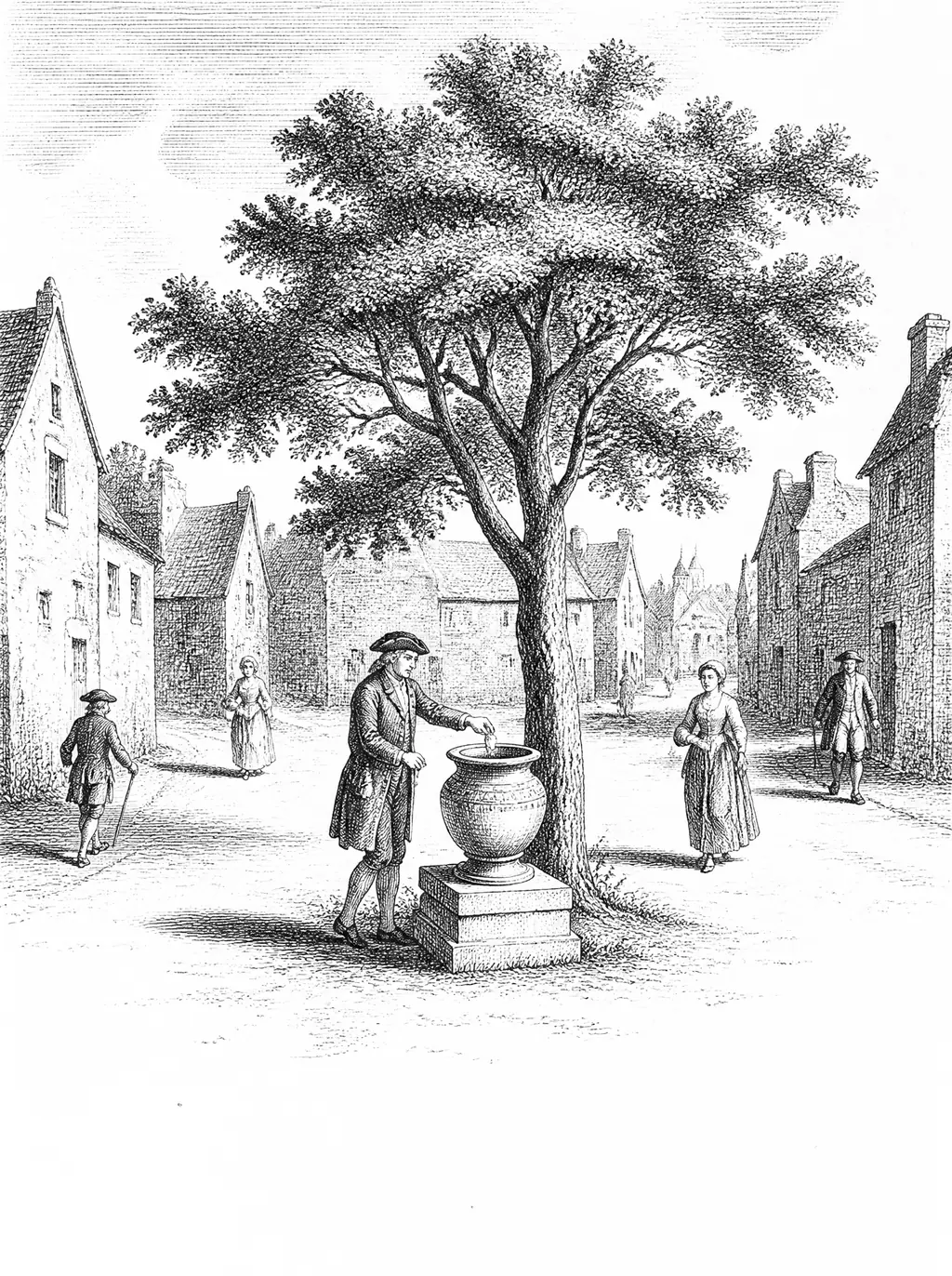
Your town votes on a bypass road. You are against it because it runs near your house. Your neighbor is for it because he owns a plot on the route and expects to sell. The shopkeeper on the high street is for it because trucks will stop rattling her windows, and the petrol station is against it because the trucks are her customers. Every vote is honest and every vote is private. Rousseau asks you to run a second ballot in your head: not whether the road is good for you, but whether the town needs it. That second question is the one the general will answers, and the first ballot may get it wrong even if every single voter is telling the truth.
Why it matters
This distinguishes popularity from legitimacy in a way that still matters: a decision can win every vote and still fail to express the general will, if it was driven by factions and private deals rather than a genuine shared interest. Rousseau's political theory asks societies to aim at the harder, rarer target, not the easier, louder one. The idea also explains why people who lose a vote can accept the result without feeling enslaved. If the law was made by everyone, asking what was good for everyone, then obeying it is obeying a will you share, even when your private will lost. That is Rousseau's answer to how a person can be governed and remain free.
“The general will is always right and tends to the public advantage; but it does not follow that the deliberations of the people are always equally correct.”
From the source
Rousseau states the distinction directly: “The general will is always right and tends to the public advantage; but it does not follow that the deliberations of the people are always equally correct... there is often a great deal of difference between the will of all and the general will.” The passage is Book II, Chapter 3, titled Whether the General Will Is Fallible. Rousseau goes on with an image from arithmetic: take away from the particular wills the pluses and minuses that cancel one another, and the general will remains as the sum of the differences. He adds the practical condition. If the people deliberate with adequate information and no communication among factions, the many small differences will produce the general will.
The pushback
Who decides which outcome actually counts as the general will rather than merely one faction's preference dressed up as the common good, especially once the concept is used to override an actual, counted majority? This vagueness is exactly what later critics pointed to as an opening for authoritarian rule carried out in the general will's name. The second objection quotes Rousseau against himself. In Book I he writes that whoever refuses to obey the general will shall be compelled to do so, which means nothing less than that he will be forced to be free. A theory that can describe coercion as freedom, critics say, has lost the ability to tell the two apart, and the Terror of 1793 showed what that confusion could cost.
The reply
Rousseau's defenders read the phrase forced to be free in its context. The citizen being compelled is one who wants the benefits of the law while exempting himself from it, and compelling him to keep the agreement he made is what any contract does. Rousseau also built safeguards. Laws must be general in form, applying to everyone alike; the state must be small enough for citizens to know each other; factions must be prevented or multiplied until they cancel. Those conditions rule out most of what has been done in the general will's name. The honest gap remains. Rousseau never says who verifies that a vote expressed the general will, and a concept with no umpire invites anyone confident enough to appoint himself.
Where it went next
Robespierre invoked the general will throughout the Revolution, and the Declaration of the Rights of Man of 1789 states that law is the expression of the general will. Kant read Rousseau and turned the idea of a will that legislates for everyone into the categorical imperative. Condorcet's jury theorem of 1785, which shows that a large body of individually competent voters is very likely to reach the right answer, has been read by later scholars as the mathematics Rousseau was reaching for. Rawls credited Rousseau as a source of his original position, and Habermas's theory of deliberative democracy is a long attempt to specify the conditions Rousseau only sketched. Jacob Talmon in 1952 blamed him for totalitarian democracy. The argument continues.
Where this leads
Man is born free supplies the whole problem this concept is meant to solve, Rousseau's own attempt to describe an authority that genuinely represents free people, rather than simply replacing one old set of chains with a differently justified new one. The ideally best government is Mill's answer a century later. Mill kept Rousseau's suspicion that a counted majority can be wrong, and built representative institutions, proportional voting, and an educated electorate to reduce the odds. Where Rousseau wanted citizens deliberating alone so no faction could capture them, Mill wanted them arguing in public so no error could survive. Same worry, opposite cure.